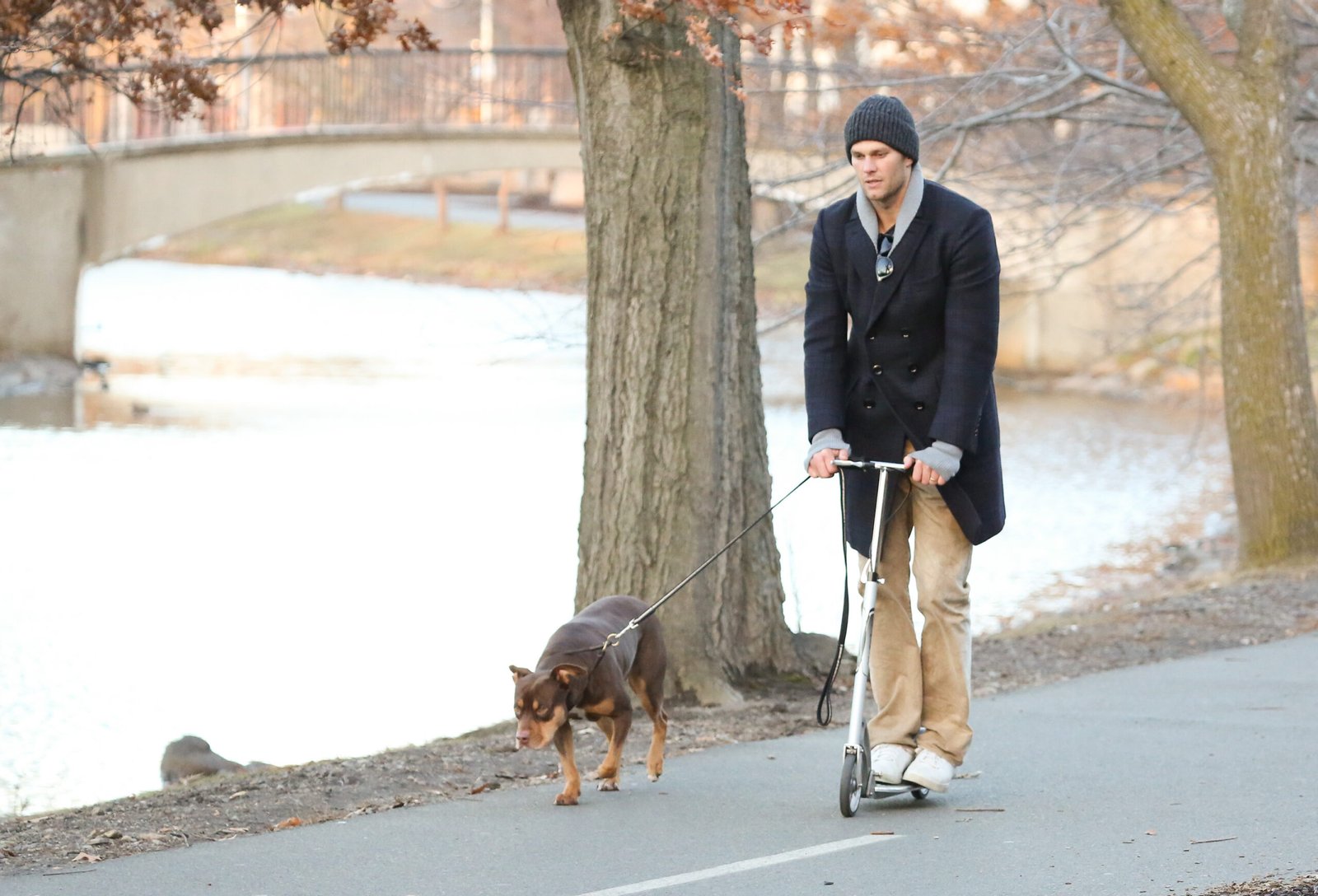
In a revelation that has stirred conversation across sports, science and popular culture, former NFL superstar Tom Brady announced that his current canine companion, Junie, is a genetic clone of his family’s late pit bull mix, Lua, who died in December 2023.
Brady confirmed that he worked alongside biotech firm Colossal Biosciences—a company in which he holds investment—to create Junie via non‑invasive cloning technology. The procedure began with a simple blood sample from Lua while she was still alive. The cloned dog, Junie, thus carries the genetic blueprint of this long‑cherished family pet.
A Personal Tribute — and More Than That
Brady emphasized that this move is not a mere science experiment but a deeply personal decision. “I love my animals. They mean the world to me and my family,” he stated. “A few years ago, I worked with Colossal and leveraged their non‑invasive cloning technology through a simple blood draw of our family’s elderly dog before she passed. In a few short months, Colossal gave my family a second chance with a clone of our beloved dog.”
The emotional value is clear: Lua was a prominent member of Brady’s household during his marriage with Gisele Bündchen, and her death struck an emotional chord with the family. Cloning Lua as Junie raises the question of how families cope with pet loss—and what “second chance” means.
Scientific Innovation Meets Ethical Debate
From a science standpoint, what’s notable is the involvement of Colossal Biosciences, which recently acquired pet‑cloning specialist Viagen Pets and Equine. That acquisition merges technologies aimed not only at pet cloning but also at more ambitious aims—such as “de‑extinction” of long‑gone species.
The method used—non‑invasive blood extraction and subsequent cloning—suggests advancements in how pet cloning is being approached, moving away from more invasive or controversial techniques.
Yet with innovation comes ethical scrutiny. Pet cloning remains a gray zone: some view it as a touching way to preserve a beloved companion; others raise concerns about identity, welfare and the message it sends about life, death and replicating sentient beings. The public response to Brady’s announcement underscores that this topic won’t fade quietly.
Why This Matters Beyond the Headlines
- Cultural impact: A high‑profile figure like Brady spotlighting pet cloning brings the topic from niche biotech circles into mainstream dialogue.
- Commercial implications: Pet cloning remains a premium service. With celebrities and high‑wealth individuals driving interest, the market — and regulatory responses — may evolve.
- Scientific ripple effects: The move brings attention to how cloning might serve broader aims—such as preserving endangered species or exploring new frontiers in genetics.
- Emotional versus existential questions: While Brady speaks of a “second chance,” others will ask: is the cloned pet truly the same? How should we value genetic continuity versus lived experience?
Final Word
Tom Brady’s announcement that his dog Junie is a clone of his late pet Lua is a mirror reflecting complex intersections: personal grief and tribute, science and commercialization, and the shifting boundaries of what’s possible. While the emotional impetus is easy to understand, the broader implications are far more layered. This story isn’t simply about a celebrity dog clone—it’s about how science, society and sentiment collide in modern life.
By SportBuzzHub staff
November 5, 2025