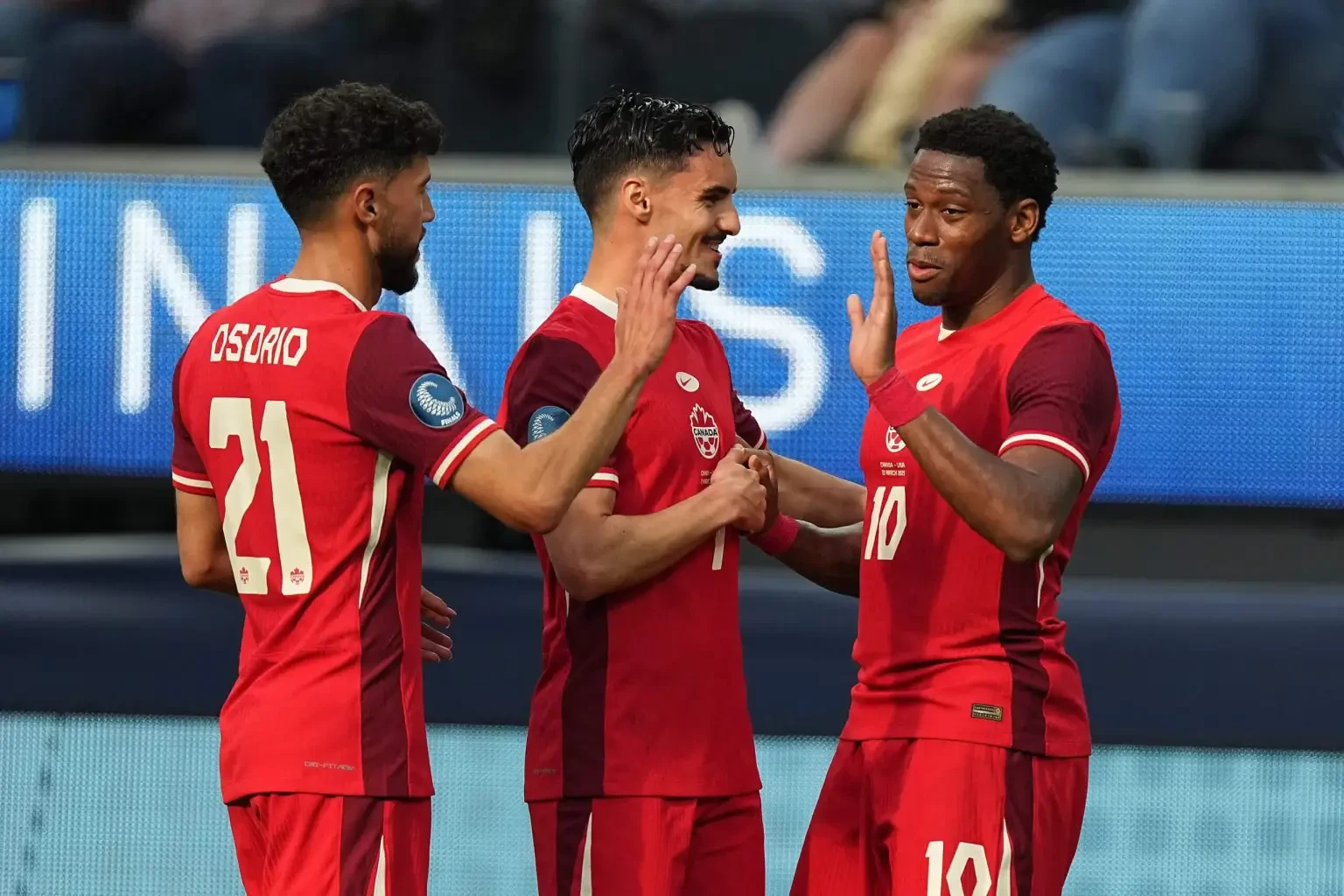
In the international friendly matchup Canada vs Ecuador, the two national teams played out a tense 0‑0 stalemate on Thursday, November 13 2025, at Toronto’s BMO Field. The Canada vs Ecuador fixture drew attention not only for its result but for the narratives around player discipline, team cohesion and the larger trajectory of the Canadian side under coach Jesse Marsch as they prepare for the 2026 FIFA World Cup.
Match Overview: Momentum, Red Card and Resilience
The Canada vs Ecuador contest began under very challenging conditions for Canada—the hosts were reduced to 10 men in the sixth minute when Ali Ahmed received a straight red card for a reckless challenge. From that moment on, Canada found themselves defending a numerical disadvantage for nearly the entire match. Despite this setback, the national side displayed a determined defensive structure and managed to hold off a strong Ecuador team—who finished runners‑up in their CONMEBOL qualifying group.
The game, attended by 28,740 fans in chilly Toronto, saw moments of Mexico‑style club rivalry and South American pressing intensity. Ecuador enjoyed phases of possession dominance, tested Canada’s back‑line and had clear chances—particularly through Enner Valencia—but lacked the final precision. Meanwhile, Canada, despite minimal attack opportunity, showed resilience and some tactical flexibility with ten men, suggesting steps forward even if the result fell short of full control in the Canada vs Ecuador fixture.
Tactical Breakdown: Ten Man Canada, Ecuador’s Pressure
Canada’s Defensive Resilience
Playing nearly 84 minutes with a man down forced Canada into an early structural shift. The Canada vs Ecuador match saw Canada adopt a compact 4‑4‑1 formation, with midfielders dropping deep and wing‑backs reluctant to push too aggressively. Defensive lines remained narrow, and the team conceded only one major chance in the first half and two in the second—remarkable considering the numerical disparity. Coach Marsch’s message of ‘work intensity and cover space’ clearly filtered through.
Ecuador’s Offensive Struggles
Ecuador arrived as an offensively potent side, yet in the Canada vs Ecuador contest they lacked ruthless finishing and got frustrated by Canada’s defensive organisation. While they generated 17 shots, many were from distance or blocked early—indicative of Canada’s press and close marking forcing the “La Tricolor” players into sub‑optimal positions. Their inability to break through early allowed Canada to build defensive confidence, despite the red‑card adversity.
Mid‑Game Momentum and Context
From the Canada vs Ecuador perspective, the early red card should have destabilised the home side. Instead, it became an opportunity for Kosovo to rally—Canada showed discipline in the early phases, avoided rash reactions, and looked less exposed than expected. Conversely, Ecuador seemed to grow impatient and lacked penetrating transitions in key moments. The tactical paradox of Canada being organised though undermanned, and Ecuador being superior though ineffective, defines the key takeaway from the Canada vs Ecuador encounter.
Broader Implications: What the Result Means
For Canada: The goalless draw in the Canada vs Ecuador fixture will elicit mixed emotions. On one hand, enduring most of the match with ten men and holding a team of Ecuador’s calibre to a clean sheet is a positive sign. On the other, Canada failed to find a goal when numerically compromised, stretching a goalless record to over 300 minutes and underscoring gaps in creativity and offensive execution. For a team aiming to build momentum ahead of the 2026 World Cup, the takeaway is this: defensive growth is real; attacking evolution is still required.
For Ecuador: The Canada vs Ecuador stalemate registers as a missed chance. As a team already qualified for international tournaments, Ecuador expected to dominate lesser‑ranked teams with numerical advantage early. The inability to convert pressure into goals reveals that even established sides must maintain sharpness and adapt tactics rather than rely solely on possession dominance.
For Confederation and Preparation Context: International friendlies—especially between CONCACAF and CONMEBOL sides—serve as preparation platforms ahead of major tournaments. The Canada vs Ecuador match is a data point in each team’s evolution: how Canada responds to adverse conditions; how Ecuador handles games where their technical superiority must translate into decisive action.
Key Takeaways & Player Performance Notes
- Ali Ahmed’s early red card changed Canada’s approach. While the team managed defensively, his departure highlights the importance of discipline in high‑stakes games.
- Jonathan David and Tajon Buchanan exhibited glimpses of attacking threat for Canada but were limited by the man‑down scenario and Ecuador’s defensive adjustments.
- For Ecuador, Enner Valencia remained lively, and Piero Hincapié’s physical play emerged as a potential catalyst. But neither were able to unlock the Canadian resistance—suggesting that Ecuador’s depth in finishing might require improvement.
- Tactical maturity from coach Marsch’s Canada—transitioning quickly after the red and holding shape—suggests a growing mental fortitude. The result may overshadow individual brilliance but does indicate team character.
What to Monitor Next
- Canada’s offensive creativity: Can Canada break their scoring drought? The Canada vs Ecuador match extended their goalless run and emphasises the need for precision and attacking patterns, especially when playing with full squads.
- Ecuador’s transition to dominant phases: Ecuador next needs to show that superior sides can convert games even when not dominating possession fully—learning to adapt when control slips.
- Preparation impact for tournaments: Canada will use this data from the Canada vs Ecuador game as they prepare for their home co‑hosted World Cup in 2026. Defensive solidity is vital—but to progress in knockout formats, attacking evolution is equally critical.
- Psychological momentum and squad depth: Going forward, how each side handles adversity (like Canada did with ten men) and how deep their squad rotation is will matter when fatigue and injuries enter the equation.
Final Assessment
The “Canada vs Ecuador” fixture might not have yielded goals, but it delivered meaningful insight into two teams at different inflection points. Canada under Martinez is showing defensive resilience and growth in mentality; Ecuador, though technically strong, revealed that even higher‑tier sides must execute with lethal precision. For fans, analysts and the teams themselves, the Canada vs Ecuador outcome is less about the 0‑0 scoreline and more about structure, adaptability and the preparation ahead of bigger moments.
Credit: SportBuzzHub – Current date: 14 November 2025