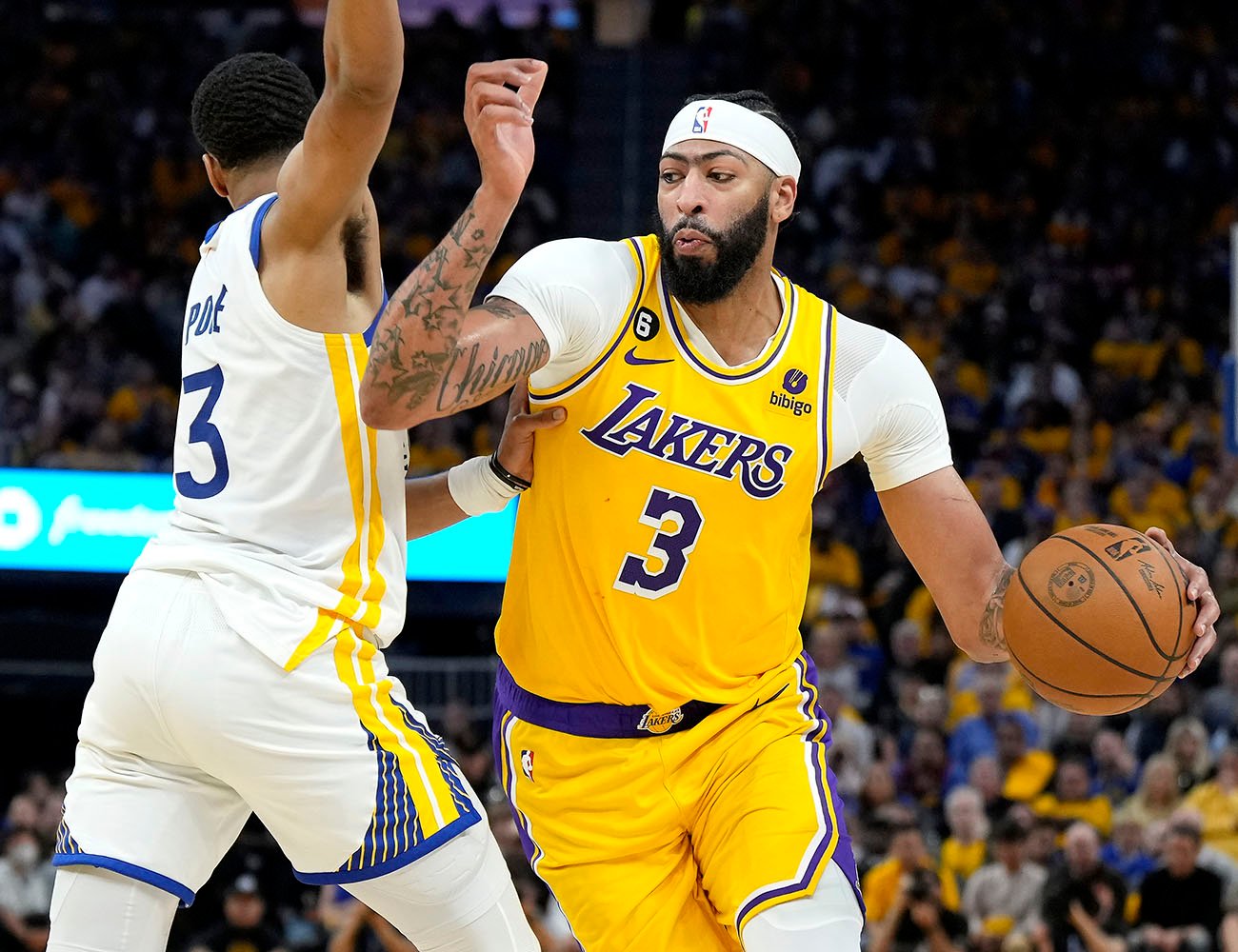
As Anthony Davis enters his 14th NBA season with the Dallas Mavericks, his statistical profile offers a rich mosaic—one of sustained excellence, adaptation, and the challenge of staying at peak performance in a league stacked with evolving talent.
Recent Performance Snapshot
In the 2024‑25 regular season, Davis averaged 24.7 points, 11.6 rebounds, and 3.5 assists per game across 51 appearances. Simultaneously, he continued to anchor the defense with over 2 blocks per game.
His career-to-date averages stand at approximately 24.1 points, 10.7 rebounds, and 2.6 assists across close to 800 games—a testament to his consistency at an elite level.
Heading into 2025‑26, early data show he’s averaging around 24.5 points, 13.0 rebounds, and 2.5 assists, signalling slight adjustments in usage and role within the Mavericks’ system.
What the Numbers Reveal
- Two-Way Impact
Davis remains one of the few players in the league who significantly influences both ends of the court. His rebound numbers (recently pushing into the 13 per-game range) and block totals continue to underline his defensive elite status. His scoring remains efficient, though it carries the caveat of managing shot volume and physical load. - Load Management & Durability
The jump from 51 games last season to a full-time role in Dallas underscores Davis’s improved health and readiness. At age 32, maintaining high-minute production while avoiding major breaks is both a personal victory and a key variable for the Mavericks’ success. - Role Evolution
As Dallas reshapes its roster and identity, Davis’s role has shifted slightly. He’s increasingly sharing offensive initiation with perimeter stars, while still acting as a dominant post presence. The slight drop in assists (from ~3.5 to ~2.5) may reflect evolved ball-handling roles around him. - Relative Efficiency
While his field-goal percentage remains robust, advanced metrics indicate Davis must remain sharp in decision-making and usage rates. As defenses adapt to his presence, maintaining high efficiency becomes a greater challenge.
Areas to Watch
- Injury prevention: With a career punctuated by lower-body, eye and other injuries, Davis’s durability is still a concern. The Mavericks must optimize his minutes and recovery protocol to avoid regressions.
- Offensive adaptability: As teams defend him more aggressively, maintaining motion, spacing and shot variety will be critical. His post-up dominance remains intact, but facing evolving defensive schemes demands versatility.
- Playoff peak performance: Regular-season stats are one thing; translating them into deep-season dominance is another. Davis’s playoff résumé has flashes of brilliance, yet his availability and consistency in May and June remain keys.
Why It Matters for the Mavericks
Dallas’s acquisition of Davis signalled a major ambition shift—adding a proven two-way star to complement rising talent and reshape their competitive ceiling. His statistical baseline provides both optimism and expectation: if he hits his full stride, the Mavericks become immediate contenders. If not, the margin for error shrinks.
For team building around Davis, the challenge will be maximizing his strengths (rim protection, rebounding, scoring in the paint) while insulating weaknesses (shot-creation off the dribble, health risks) with surrounding personnel.
Final Word
Anthony Davis’s current statistical trajectory tells a story of a veteran star still performing at high levels, adapting his role, and positioning himself for perhaps one last peak. For the Mavericks, his numbers aren’t just impressive—they are foundational. If he remains healthy and effective, the team’s path forward looks brighter than many expected. If he falters, the stakes rise. In a league defined by minute margin, Davis’s stats are not just statistics—they are signals of possibility.
Published for SportBuzzHub — your destination for deep-dive NBA coverage and real-time insight.