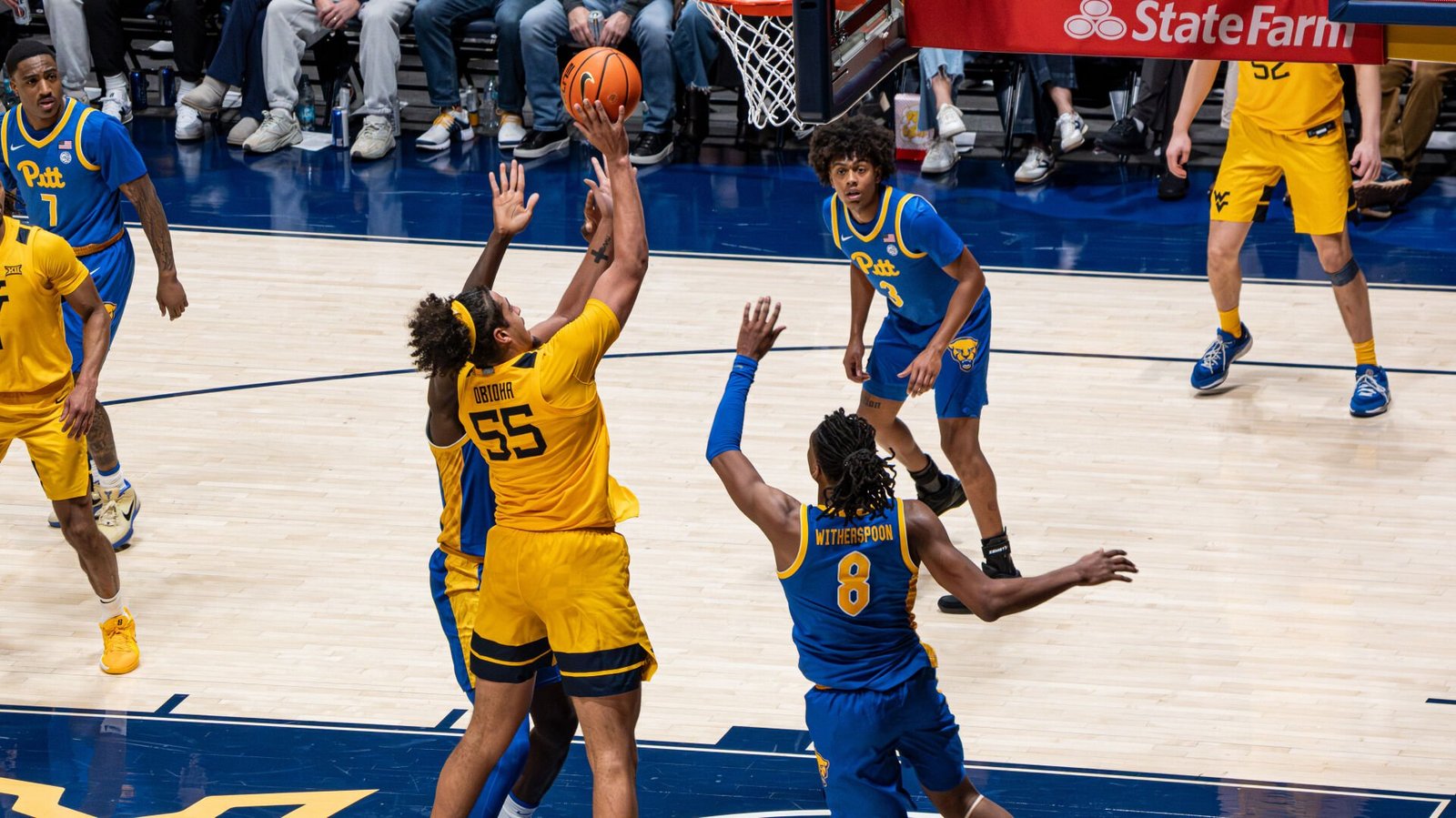
The WVU basketball program made a resounding statement Thursday night, as the West Virginia Mountaineers dominated the 192nd edition of their storied rivalry with the Pittsburgh Panthers, earning a 71‑49 victory to extend their winning cushion in the series to 102‑90. Within the broader context of the WVU basketball season, the performance highlighted early cohesion under coach Ross Hodge, defensive identity, and a platform for advancement in the competitive Big 12 landscape.
Strong Start to the Season
WVU basketball entered the contest riding a perfect 3‑0 record, and to win in such convincing fashion—holding Pitt to 25 % from beyond the arc and 38 % overall—is further evidence of the team’s defensive principles translating into real results. The Mountaineers forced 12 turnovers, outrebounded Pitt 32‑20 in the paint, and controlled tempo throughout. It was less a shock and more a declaration: WVU basketball intends to compete at a high level this season.
Coach Ross Hodge, in his first Backyard Brawl rivalry game, remarked on the “maturity” and focus he saw in his team—particularly meaningful given the litany of obstacles college programs face in today’s transfer‑ and injury‑heavy environment.
Tactical Breakdown: Key Areas of Execution
Defensive Dominance
The signature of this WVU basketball outing was defensive execution. The Mountaineers rotated cleanly, communicated on the switches, and prevented Pitt from gaining traction inside. That paint advantage (32‑20) allowed WVU to stifle high‑percentage attempts and force long‑range shots, which the Panthers missed at an alarming clip.
Balanced Offense and Role Fulfillment
Offensively, four WVU players scored in double figures, led by forward Harlan Obioha who dropped 19 points. The balanced scoring signaled that WVU basketball’s identity isn’t dependent on a single star but built on collective production. The Mountaineers effectively transitioned from defense to offense, shot at 52 % from the field, and avoided lapses that have plagued them in previous seasons.
Momentum and Rivalry Impact
WVU basketball’s blowout win in this rivalry context carries extra weight. The Backyard Brawl isn’t just another game—it’s a cultural marker. Winning this game decisively elevates not just the team’s confidence but the program’s narrative. In the broader Big 12 race, the Mountaineers now enter the mix as a team capable of asserting itself.
Program Development and Season Outlook
For WVU basketball, this win is more than one night; it’s a signal of trajectory. The Mountaineers have committed themselves to a defense‑first philosophy under Hodge, and the early results suggest that creed is taking root. The schedule ahead is demanding—with high‑profile Big 12 matchups and national exposure set to test them—but if WVU continues to build on the discipline, the program could be on the rise.
Key factors to monitor in the season:
- Continued defensive consistency: Can WVU replicate this level of disruption against higher‑tier postseason opponents?
- Offensive evolution: Balanced scoring is positive, but creating go‑to options in late stages will be critical for WVU basketball’s next jump.
- Depth and rotation: Injuries, fatigue and intensity in the Big 12 demand deep benches. How the Mountaineers manage workloads will affect sustainability.
- Transition to conference play: With the Big 12 schedule looming, WVU basketball’s performance in non‑conference rivalries like this provides a template—but the real test begins in January.
Key Players and Emerging Roles
- Harlan Obioha: His 19‑point output in the Backyard Brawl underscored that he is not just a role player but a featured contributor in the WVU basketball system.
- Coach Ross Hodge: Demonstrated poise, tactical awareness and motivation in a rivalry environment. His ability to maintain focus and extract effort will be pivotal.
- Supporting cast: The spread of scoring, defensive effort and rebound control all suggest that multiple players are ready to elevate their roles. For WVU basketball, this depth is essential for NCAA Tournament aspirations.
Final Thoughts
WVU basketball’s dominant victory over Pitt in the Backyard Brawl is a meaningful moment: it blends rivalry heritage with emerging program identity. The Mountaineers combined defensive ferocity with offensive maturity and may now be positioned to move beyond past inconsistencies.
Yet, one game—even a signature one—does not define a season. WVU basketball must sustain this effort through a long schedule, adapt to injuries and pressure, and develop late‑game execution in tight contests. If these elements come together, this win could be seen as the launchpad of a stronger era in Morgantown.
Credit: SportBuzzHub – Current date: 14 November 2025